This is default featured slide 1 title

Go to Blogger edit html and find these sentences.Now replace these sentences with your own descriptions.This theme is Bloggerized by Lasantha Bandara - Premiumbloggertemplates.com.

This is default featured slide 2 title

Go to Blogger edit html and find these sentences.Now replace these sentences with your own descriptions.This theme is Bloggerized by Lasantha Bandara - Premiumbloggertemplates.com.

This is default featured slide 3 title

Go to Blogger edit html and find these sentences.Now replace these sentences with your own descriptions.This theme is Bloggerized by Lasantha Bandara - Premiumbloggertemplates.com.

This is default featured slide 4 title

Go to Blogger edit html and find these sentences.Now replace these sentences with your own descriptions.This theme is Bloggerized by Lasantha Bandara - Premiumbloggertemplates.com.

This is default featured slide 5 title

Go to Blogger edit html and find these sentences.Now replace these sentences with your own descriptions.This theme is Bloggerized by Lasantha Bandara - Premiumbloggertemplates.com.

Tuesday, May 14, 2019

Ebook Download , by Andrew Roberts

Ebook Download , by Andrew Roberts

This is a really sensible book that should read. The adhering to might provide you the method to obtain this publication. It is really reduce. When the other individuals must walk around and also go outdoors to get the book in the book shop, you can simply be by seeing this website. There is offered link that you could discover. It will certainly guide you to go to the book web page as well as obtain the , By Andrew Roberts Finished with the download as well as get this book, start to review.

, by Andrew Roberts

, by Andrew Roberts


, by Andrew Roberts


Ebook Download , by Andrew Roberts

How is your time to invest the leisure time in this day? Are you starting to do a brand-new task? Will you attempt to read? Everyone understands and also concurs that analysis is an excellent practice. You need to review and read, furthermore guide with several advantages. But, is that real? There are just couple of people that love to check out. If you are one of them, it is great for you. We will provide you a new publication that could make your life enhanced to be much better.

Guide that is presented to review in this time will certainly be the , By Andrew Roberts As we have actually used and also provided, you could interest in the cover of this book initially. Considering the cove will make you really feel interested or not in this book. Yet, lots of people have proved that this book has actually been extremely intriguing to review, also looking from only guide cover. The principle of making the cover and just how the writer provides the title are really fantastic.

We provide guide is based upon the reasons that will influence you to live better. Even you have already the reading book; you could also improve the understanding by obtaining them create , By Andrew Roberts This is really a sort of publication that not only provides the inspirations. The outstanding lessons, Experiences, and knowledge can be gotten. It is why you need to read this publication, even web page by page to the finish.

You can change your mind to be much better after obtaining the resources from some documents. However when you have the resources from this book, you can take how different this publication view from others. Yeah, this is just what makes you feel finished to get over the feature of the sources. , By Andrew Roberts turns into one referral that supplies the existence of new information and also concepts. Now, your time is for getting the book quicker. This is it the book that you need now!

, by Andrew Roberts

Product details

File Size: 328 KB

Print Length: 144 pages

Publisher: HarperCollins e-books (February 15, 2011)

Publication Date: February 15, 2011

Sold by: HarperCollins Publishers

Language: English

ASIN: B003XDUCLI

Text-to-Speech:

Enabled

P.when("jQuery", "a-popover", "ready").execute(function ($, popover) {

var $ttsPopover = $('#ttsPop');

popover.create($ttsPopover, {

"closeButton": "false",

"position": "triggerBottom",

"width": "256",

"popoverLabel": "Text-to-Speech Popover",

"closeButtonLabel": "Text-to-Speech Close Popover",

"content": '

' + "Text-to-Speech is available for the Kindle Fire HDX, Kindle Fire HD, Kindle Fire, Kindle Touch, Kindle Keyboard, Kindle (2nd generation), Kindle DX, Amazon Echo, Amazon Tap, and Echo Dot." + '
'

});

});

X-Ray:

Not Enabled

P.when("jQuery", "a-popover", "ready").execute(function ($, popover) {

var $xrayPopover = $('#xrayPop_283C463A56B611E9A47738F66764B21C');

popover.create($xrayPopover, {

"closeButton": "false",

"position": "triggerBottom",

"width": "256",

"popoverLabel": "X-Ray Popover ",

"closeButtonLabel": "X-Ray Close Popover",

"content": '

' + "X-Ray is not available for this item" + '
',

});

});

Word Wise: Enabled

Lending: Not Enabled

Screen Reader:

Supported

P.when("jQuery", "a-popover", "ready").execute(function ($, popover) {

var $screenReaderPopover = $('#screenReaderPopover');

popover.create($screenReaderPopover, {

"position": "triggerBottom",

"width": "500",

"content": '

' + "The text of this e-book can be read by popular screen readers. Descriptive text for images (known as “ALT text”) can be read using the Kindle for PC app and on Fire OS devices if the publisher has included it. If this e-book contains other types of non-text content (for example, some charts and math equations), that content will not currently be read by screen readers. Learn more" + '
',

"popoverLabel": "The text of this e-book can be read by popular screen readers. Descriptive text for images (known as “ALT text”) can be read using the Kindle for PC app if the publisher has included it. If this e-book contains other types of non-text content (for example, some charts and math equations), that content will not currently be read by screen readers.",

"closeButtonLabel": "Screen Reader Close Popover"

});

});

Enhanced Typesetting:

Enabled

P.when("jQuery", "a-popover", "ready").execute(function ($, popover) {

var $typesettingPopover = $('#typesettingPopover');

popover.create($typesettingPopover, {

"position": "triggerBottom",

"width": "256",

"content": '

' + "Enhanced typesetting improvements offer faster reading with less eye strain and beautiful page layouts, even at larger font sizes. Learn More" + '
',

"popoverLabel": "Enhanced Typesetting Popover",

"closeButtonLabel": "Enhanced Typesetting Close Popover"

});

});

Amazon Best Sellers Rank:

#417,602 Paid in Kindle Store (See Top 100 Paid in Kindle Store)

In "Waterloo: June 18, 1815: The Battle for Modern Europe," Andrew Roberts manages to summarize a complex battle, some of whose aspects are still controversial, in just 122 pages plus three worthwhile appendices. Roberts writes in clear, easy to understand prose, surveying the battle from the strategic to the tactical levels. He includes a number of well-chosen vignettes at the individual level to provide a sense of scale of the battle, as well as necessary explanation on the equipment and organizations of the participating armies.Roberts quickly touches a number of the academic controversies about the battle. Among others, these include the status of Napoleon's health during the Waterloo Campaign, the extent of Wellington's surprise at the French crossing of the border, the placement of allied troops at Hal to block a possible French flanking manuever on the Mont St. Jean position, and the cooperation between Wellington and Blucher. In each case, he deftly mentions the nature of the controversy, offers a brief opinion, and moves on. Serious students of Waterloo may find this approach overly simplified, but it should suffice for the average reader. Roberts does go to some effort to mention the the contributions of all members of the allied coalition that fought at Waterloo, including Belgian and Dutch units that are often neglected.The treatment of the course of the battle of Waterloo follows a commonly used breakdown of the combat into five phases. Roberts' real gift is his ability to present the story of Waterloo in a manner that covers the significant details but can be followed by the average reader. Of necessity, Roberts has simplified a great deal of information to achieve the short format; this work is focused on the battle rather than the larger campaign of the hundred days. He includes a nice bibliography for those readers seeking more detail. There is also a nice selection of maps and photos to orient the reader.This book is highly recommended for the casual reader seeking a managable and enjoyable summary of the Battle of Waterloo.

Is there any battle in history as famous as Waterloo? Although there are many remarkable battles, very few are as dramatic, consequential, or well known as the one that took place on a rainy June day in an otherwise unremarkable little village in the Belgian hinterland.Just over a year ago, My wife and I visited the battlefield for the first time (I admit that the site had little interest to me back when I lived in Brussels). Today, it contains an excuisit and elaborate visiting center, complete with Video and graphic presentations, and a bookstore in which you can find materials about the battlefield in almost every European language and several non-European ones.After the impressive Visiting Center, the site itself is a great disappointmnet; It contains a tall hill constructed many years after the battle, from which you can see the field as none of the participants could at the time. I must confess that, gazing downwards at the slight slopes of Mont St. Jean, I've been utterly incapable of imagining the carnage that brought me, along with millions of other tourists, to that spot, almost two centuries after it has ended.Although I've been to the battlefield, and read a highly entertaining account of the campaign in David King's masterly book on the Congress of Vienna (Vienna, 1814: How the Conquerors of Napoleon Made Love, War, and Peace at the Congress of Vienna), Andrew Roberts' account gives the most succicent description of the campaign and its underlying strategy. If it then dwelves too much on the tactics for my tastes, that surely says more about my limited interest in military history than on the merits of the work; On the other hand, true devotees of l'Histoire Militaire are unlikely to find much that is new in this slender tomb.Napoleon's return from Alba brought about a new European crisis, with the various powers of the day gathering armies with all the speed they could master to confront the Corsican Emperor. Napoleon's prefered strategy against the numerically superior powers was to match and defeat each army in turn, before they united together.In June 1815, Napoleon's enemies had two armies in the field: a mostly Prussian one, led by General Blucher, and a mostly English one led by The Duke of Wellington. On the 16th of June, Napoleon split his forces and engaged both armies; The British held their ground, and the Prussian fled... but not far enough.The failure to destroy either Blucher or Wellington's forces meant that time was running out for Napoleon. Superb generalship would be required to destroy Wellington's armies before the Prussians could join them. The emperor, past his prime and shorn of his best henchmen, did not rise to the challenge. The 17th of June contained little action, while Wellington positioned his forces on a ground of his chosing; The battle for Europe waited for the morrow.Foul weather delayed the attack, as Napoleon waited for the ground to dry. Waterloo was a relatively small battlefield, and allowed little place for Napoleon's usual prefered manouvers. The assaults would be direct, brutal, and hopefully decisive.They weren't. Through the chaos, and despite frequent setbacks, the English forces held firm. Sucsessive attempts to break the English line failed. The last attack, by Napoleon's elite Imperial Guard, came as late as 7:30 PM. By that time, Blucher's forces were joining the melee in droves. Napoleon's armies broke.The conquerors of Napoleon met around 9 O'clock in a little inn, one that was on Napoleon's side of the battle just hours earlier. "Quelle Affaire!" proclaimed Blucher to his English counterpart. It is Ironic that the only language they shared was that of their defeated foes.Some 120,000 Men died in the Waterloo campaign. Seventy one thousand of them in the battle itself. Napoleon's reign would be over within weeks of that fateful say. The campaign marked the beginning of Europe's long peace - a peace that lasted, albeit with isolated and sharp interruptions, from that June battle until another June day, almost a century later, when a young Austrian was assassinated in Sarajevo.

For class

Brilliant use of eyewitness accounts. Read it in one sitting

Short book on the battle of Waterloo. Very easy read by a great writer of war and history books. Brilliant

Fascinating, making history alive, could be longer. It is very fine detail the battle maps, i think I will read this many times.

Brief, to the point, balanced, very informative. The definitive book for the uninitiated, and a needed addition to the sophisticated libraries. To be read.

If you are a history buff and student of military strategy this is definitely a book for you. The author presents the decisive battle as a long chess game between two military geniuses: Napoleon Bonaparte and the Duke of Wellington. Aside of the grandeur and battle between the Anglo Allies and the French Arme', the author examines the psyche of Napoleon, and Wellington, The author peels away and reveals the two men's weaknesses and errors during this battle. Their relationships with their various commanders and allies: Blucher, Ney, Uxbridge, Pitcon, Grouchy and Soult are also given their importance in a well told narrative. The author also includes letters and reports from the battlefield Overall, this is a brief but comprehensive record of the Battle of Waterloo which should be read by any student of the battlefield.

, by Andrew Roberts PDF
, by Andrew Roberts EPub
, by Andrew Roberts Doc
, by Andrew Roberts iBooks
, by Andrew Roberts rtf
, by Andrew Roberts Mobipocket
, by Andrew Roberts Kindle

, by Andrew Roberts PDF

, by Andrew Roberts PDF

, by Andrew Roberts PDF

Sunday, May 5, 2019

PDF Ebook Fodor's San Diego (Full-color Travel Guide)

PDF Ebook Fodor's San Diego (Full-color Travel Guide)

Fodor's San Diego (Full-color Travel Guide). Reviewing makes you a lot better. Who says? Several smart words claim that by reading, your life will certainly be much better. Do you think it? Yeah, prove it. If you need the book Fodor's San Diego (Full-color Travel Guide) to read to show the wise words, you could visit this web page completely. This is the site that will certainly provide all the books that possibly you require. Are the book's collections that will make you really feel interested to read? One of them below is the Fodor's San Diego (Full-color Travel Guide) that we will certainly recommend.

Fodor's San Diego (Full-color Travel Guide)

Fodor's San Diego (Full-color Travel Guide)


Fodor's San Diego (Full-color Travel Guide)


PDF Ebook Fodor's San Diego (Full-color Travel Guide)

Do you believe that Fodor's San Diego (Full-color Travel Guide) is a great publication? Yes, we think so, looking as well as recognizing who the writer of this book; we will undoubtedly understand that it is a great publication to read whenever. The writer of this book is popular in this subject. When someone requires the reference from the topic, they will seek for the information and also data from guides created by this author.

Reviewing book Fodor's San Diego (Full-color Travel Guide), nowadays, will not compel you to consistently acquire in the store off-line. There is a fantastic place to acquire the book Fodor's San Diego (Full-color Travel Guide) by online. This web site is the best site with great deals varieties of book collections. As this Fodor's San Diego (Full-color Travel Guide) will remain in this publication, all publications that you need will be right here, too. Just hunt for the name or title of the book Fodor's San Diego (Full-color Travel Guide) You can find exactly what you are hunting for.

Checking out will not just meet your time openly. It will certainly provide the methods as well as numerous points that can be done when reading. Getting the facts, amusement, lesson, as well as expertise can be reached less complicated by reading guide. You might not just have to spare you time for your family or friends. In some cases, spending few times for reading will be additionally precious.

After obtaining the soft data, you could easily develop brand-new ideas in your mind. It is hard to obtain guide in your city, most likely furthermore by checking out the shop. Going to the store will not likewise provide guarantee to get guide? So, why do not you take Fodor's San Diego (Full-color Travel Guide) in this website? Also that's just the soft documents; you could really feel that guide will certainly be so valuable for you and life about.

Fodor's San Diego (Full-color Travel Guide)

Product details

Series: Full-color Travel Guide (Book 29)

Paperback: 360 pages

Publisher: Fodor's Travel; Fol Pap/Ma edition (June 4, 2013)

Language: English

ISBN-10: 089141942X

ISBN-13: 978-0891419426

Product Dimensions:

5.2 x 0.6 x 8 inches

Shipping Weight: 15.5 ounces (View shipping rates and policies)

Average Customer Review:

3.7 out of 5 stars

12 customer reviews

Amazon Best Sellers Rank:

#1,289,667 in Books (See Top 100 in Books)

The guide covered all of the sites I wished to visit. I found the restaurant guide helpful - sometimes very good based on my tastes, but I did not use the hotel guide. We rented a condo for the weeks we were there. The book does have some helpful websites plus telephone numbers and in many instances, a specific address and directions. We used public transportation. I did not find suggested busses/trolleys listed with primary sites, but the guide did have websites listed. I found the public transportation website very useful. I wish that all Spanish names & sites had phonetic pronunciation; a few did but most did not. It did seem to be written with more information that I needed. Photos were a bonus. The general maps were helpful, but the specific area maps were very helpful. I have purchased Fodor's guides before and I probably will again.

The book gave some of the basics, but I generally got more from other Fodor's guides. The suggested itineraries were rather brief, and the book overall, in each subject, really just seemed to touch the surface. The book clearly gave me some ideas of what to do and see and where to go, but I felt like I would need more information from somewhere else before I could make plans.

Moving to SD in about a week. Got this a while ago thinking it might be informative. Not so much. Biggest gripe: lots of space used covering various hotels and restaurants. Who the hell doesn't have TripAdvisor/Yelp/etc. apps in their pocket at all times?! The modern guidebook should take that into account and focus more on things free apps do NOT already do better. Descriptions of some neighborhoods were only a sentence or two. More disappointing, the more I think about it. Just cut back another star. The map isn't good or useful either. Also, the most recent edition is a year+ old.Instead of this book, poke around on Trip Advisor and other sites and apps. Free. Better.Note to publishers: Want a better guide? I'll give you a neighborhood by neighborhood guide of what to do in SD. People don't buy travel guides for lists of hotels and restaurants anymore.

Great guide. I am using this guide to plan every aspect of a future trip to San Diego. From the hotel section to the beaches section to the must see attractions this book has been extremely helpful. I wish I had had this book when I had visited San Diego several years ago.

I recently moved to San Diego, and thought I might as well treat the city like I do other cities when traveling. I've used various Fodor books before and have always enjoyed - full of so much information packed into a little book. I woud imagine these books would even be great if you're from the city!

The book was very helpful in a business trip in San Diego. Very detailed and will be great to much longer trip. A map would make this book five stars.

Has good info.

Used this book in October and love it. It gave us the top things to see in a short time frame

Fodor's San Diego (Full-color Travel Guide) PDF
Fodor's San Diego (Full-color Travel Guide) EPub
Fodor's San Diego (Full-color Travel Guide) Doc
Fodor's San Diego (Full-color Travel Guide) iBooks
Fodor's San Diego (Full-color Travel Guide) rtf
Fodor's San Diego (Full-color Travel Guide) Mobipocket
Fodor's San Diego (Full-color Travel Guide) Kindle

Fodor's San Diego (Full-color Travel Guide) PDF

Fodor's San Diego (Full-color Travel Guide) PDF

Fodor's San Diego (Full-color Travel Guide) PDF

Friday, April 19, 2019

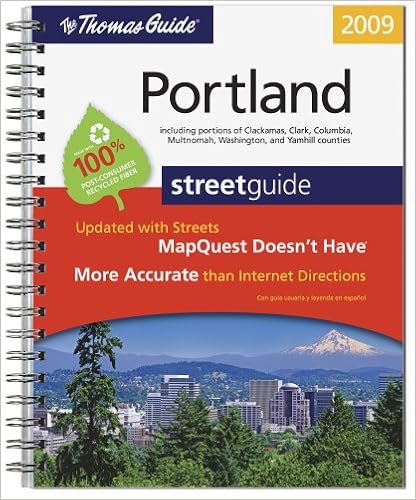
Download Ebook The Thomas Guide 2009 Portland: Street Guide

Download Ebook The Thomas Guide 2009 Portland: Street Guide

Adhering to the great practice will reveal the good routine, also. When having a great friend that has reading behavior, it is required for you to have that such routine. Well, even reviewing is truly not your design, why do not you try it when? To attract you to love analysis, we will certainly provide The Thomas Guide 2009 Portland: Street Guide currently. Below this book has the tendency to be the most referred book that many people review it.

The Thomas Guide 2009 Portland: Street Guide

The Thomas Guide 2009 Portland: Street Guide


The Thomas Guide 2009 Portland: Street Guide


Download Ebook The Thomas Guide 2009 Portland: Street Guide

Do not you bear in mind regarding the book that constantly accompanies you in every downtime? Do you till reviewed it? Probably, you will require brand-new source to take when you are bored with the previous book. Now, we will certainly present once more the very stunning book that is recommended. Guide is not the magic publication, but it could handle something to be much bête. The book is right here, the The Thomas Guide 2009 Portland: Street Guide

Yeah, when attempting to check out a new publication as this The Thomas Guide 2009 Portland: Street Guide, you could begin with specific time as well as place. Structure interest in reading this book or every book is required. The soft documents of this book that is provided will certainly be conserved in such particular library. If you truly have ready to review it, simply comply with the kindness of the life. It will certainly boost your quality of the life nevertheless is the duty. To see just how you could get guide, this is much recommended to as soon as possible. You could take different time of the begin to review.

The advantages that you could get from checking out type of The Thomas Guide 2009 Portland: Street Guide will remain in some ways. Locate this book as your picked analysis material that you truly wish to do. After looking for some shops and also have not discovered it, currently this is your utmost time to obtain it. You have located it. This soft data book will encourage you reviewing habit to grow quicker. It's because the soft data can be checked out conveniently in any time that you intend to review and have prepared.

When you truly require it as your source, you could locate it currently and here, by discovering the link, you could see it and begin to get it by saving in your personal computer system gadget or move it to other device. By getting the web link, you will get that the soft data of The Thomas Guide 2009 Portland: Street Guide is really recommended to be one part of your hobbies. It's clear as well as wonderful adequate to see you really feel so fantastic to obtain the book to check out.

The Thomas Guide 2009 Portland: Street Guide

Thomas Brothers Portland, Oregon Atlas features: regular updates to ensure that new streets and points of interest are included; four-color maps for easy viewing; ZIP code boundaries, block numbers, highway exits, overpasses and underpasses shown on detailed maps; latitude and longitude notations that identify approximate global position; full index for easy location of streets and points of interest; foldout map for quick and easy location of map pages; Cities and Communities: index to help users easily locate map pages; vicinity maps for overview coverage of surrounding areas; detailed map of downtown areas; consistent map scale from page to page; convenient lav flat special binding.

Read more

Product details

Spiral-bound: 192 pages

Publisher: Thomas Brothers Maps; Spi edition (May 5, 2008)

Language: English

ISBN-10: 0528870300

ISBN-13: 978-0528870309

Product Dimensions:

8.8 x 0.8 x 11.2 inches

Shipping Weight: 1.5 pounds

Average Customer Review:

3.9 out of 5 stars

10 customer reviews

Amazon Best Sellers Rank:

#701,838 in Books (See Top 100 in Books)

As Described, in great condition. arrived on time can't live without one.This book is out of print and I am so glad we were able to find one is this great condition.

excellent....so far i have found only one problem...since 2009 and today 39th st is now caesar chavez blvd

I "loved" it. This is such a hot item in Portland that someone liberated this copy from my truck and left behind the $30 Starbucks cup. Go figure!

Great reference. This will be perfect when online access is not available.

The Thomas Guide for Portland is a wonderful asset for those of us who appreciate actual books. It won't take you down dead end roads, give you left turns onto one-way streets, and lets you see the layout in excellent perspective. It is shame it is no longer published.

Relocating to Portland soon, and this will be SO helpful!

Been using these books for years now and in fact had wore out my old one.They are very helpful,Thank you!

Excellent fantastic so very useful.

The Thomas Guide 2009 Portland: Street Guide PDF
The Thomas Guide 2009 Portland: Street Guide EPub
The Thomas Guide 2009 Portland: Street Guide Doc
The Thomas Guide 2009 Portland: Street Guide iBooks
The Thomas Guide 2009 Portland: Street Guide rtf
The Thomas Guide 2009 Portland: Street Guide Mobipocket
The Thomas Guide 2009 Portland: Street Guide Kindle

The Thomas Guide 2009 Portland: Street Guide PDF

The Thomas Guide 2009 Portland: Street Guide PDF

The Thomas Guide 2009 Portland: Street Guide PDF

Thursday, February 21, 2019

Free Ebook Natural Zeolites: Occurrence, Properties, Applications (Reviews in mineralogy and geochemistry)

Free Ebook Natural Zeolites: Occurrence, Properties, Applications (Reviews in mineralogy and geochemistry)

So, when you get this book, it seems that you have actually located the ideal selection, not just for today life yet additionally following future. When spending couple of time to read this book, it will certainly indicate better than investing even more times for talking and socializing to throw away the moment. This is means, we actually advise Natural Zeolites: Occurrence, Properties, Applications (Reviews In Mineralogy And Geochemistry) a reading publication. It can be your correct good friend remaining in the complimentary or spare time wherever you are. Yeah, you could read it in soft data in your easy device.

Natural Zeolites: Occurrence, Properties, Applications (Reviews in mineralogy and geochemistry)

Natural Zeolites: Occurrence, Properties, Applications (Reviews in mineralogy and geochemistry)


Natural Zeolites: Occurrence, Properties, Applications (Reviews in mineralogy and geochemistry)


Free Ebook Natural Zeolites: Occurrence, Properties, Applications (Reviews in mineralogy and geochemistry)

Now existing! A book that will provide excellent impacts for you! A publication has large amounts with the daily problem around. This book is a publication that has actually been developed by a knowledgeable author. For the outcome, the writer truly has excellent result in attract the readers. It creates the title of this book is additionally so fascinating. Natural Zeolites: Occurrence, Properties, Applications (Reviews In Mineralogy And Geochemistry) is this publication title.

When you now really feel bemused to try the certain books to read, Natural Zeolites: Occurrence, Properties, Applications (Reviews In Mineralogy And Geochemistry) can be a choice. This is a clever option for you. Well, guide can lead you making much better options and also alternatives. After obtaining the book, you will not be bemused once again to locate the right book. Book is one of the home windows that open up the globe. This book is also just what you need in order to accompany you.

Knowing the means how you can get this book Natural Zeolites: Occurrence, Properties, Applications (Reviews In Mineralogy And Geochemistry) is additionally important. You have been in ideal website to begin getting this details. Get the Natural Zeolites: Occurrence, Properties, Applications (Reviews In Mineralogy And Geochemistry) web link that we give right here as well as visit the web link. You can get the book Natural Zeolites: Occurrence, Properties, Applications (Reviews In Mineralogy And Geochemistry) or get it as soon as possible. You could promptly download this Natural Zeolites: Occurrence, Properties, Applications (Reviews In Mineralogy And Geochemistry) after obtaining bargain. So, when you require guide quickly, you can straight get it. It's so easy therefore fats, right? You must like to by doing this.

It will certainly constantly be far better to discover this publication and various other collections in this referred web site. You could not need to get the book by strolling round your city and also discover the book store. By seeing this web site, you could find lots of publication from catalogues to catalogues, from title to title and also from author to writer. One to remember is that we also supply remarkable publications from outside countries in this world. So, Natural Zeolites: Occurrence, Properties, Applications (Reviews In Mineralogy And Geochemistry) as one of the collections is extremely relied on the beginnings.

Natural Zeolites: Occurrence, Properties, Applications (Reviews in mineralogy and geochemistry)

About the Author

David L. Bish, Los Alamos, New Mexico, USA and Douglas W. Ming, Houston, Texas, USA.

Read more

Product details

Series: Reviews in Mineralogy and Geochemistry, (Book 45)

Paperback: 668 pages

Publisher: de Gruyter (May 7, 2018)

Language: English

ISBN-10: 093995057X

ISBN-13: 978-0939950577

Product Dimensions:

6.1 x 1.5 x 9.2 inches

Shipping Weight: 2.2 pounds (View shipping rates and policies)

Average Customer Review:

Be the first to review this item

Amazon Best Sellers Rank:

#2,145,951 in Books (See Top 100 in Books)

Natural Zeolites: Occurrence, Properties, Applications (Reviews in mineralogy and geochemistry) PDF
Natural Zeolites: Occurrence, Properties, Applications (Reviews in mineralogy and geochemistry) EPub
Natural Zeolites: Occurrence, Properties, Applications (Reviews in mineralogy and geochemistry) Doc
Natural Zeolites: Occurrence, Properties, Applications (Reviews in mineralogy and geochemistry) iBooks
Natural Zeolites: Occurrence, Properties, Applications (Reviews in mineralogy and geochemistry) rtf
Natural Zeolites: Occurrence, Properties, Applications (Reviews in mineralogy and geochemistry) Mobipocket
Natural Zeolites: Occurrence, Properties, Applications (Reviews in mineralogy and geochemistry) Kindle

Natural Zeolites: Occurrence, Properties, Applications (Reviews in mineralogy and geochemistry) PDF

Natural Zeolites: Occurrence, Properties, Applications (Reviews in mineralogy and geochemistry) PDF

Natural Zeolites: Occurrence, Properties, Applications (Reviews in mineralogy and geochemistry) PDF

Ebook Download The Travels of Marco Polo, by Marco Polo Peter Harris

Ebook Download The Travels of Marco Polo, by Marco Polo Peter Harris

Obtain the benefits of reading routine for your life design. Schedule The Travels Of Marco Polo, By Marco Polo Peter Harris notification will constantly associate with the life. The reality, understanding, science, health and wellness, religion, amusement, as well as a lot more could be discovered in composed e-books. Several writers provide their encounter, science, research study, and all points to show you. Among them is through this The Travels Of Marco Polo, By Marco Polo Peter Harris This e-book The Travels Of Marco Polo, By Marco Polo Peter Harris will offer the required of message and statement of the life. Life will be completed if you understand much more things with reading e-books.
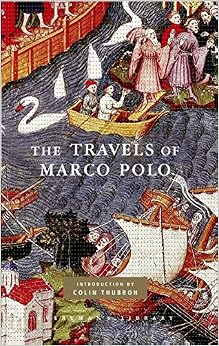
The Travels of Marco Polo, by Marco Polo Peter Harris

The Travels of Marco Polo, by Marco Polo Peter Harris


The Travels of Marco Polo, by Marco Polo Peter Harris


Ebook Download The Travels of Marco Polo, by Marco Polo Peter Harris

Do you need new reference to accompany your leisure when going to house? Checking out a publication can be an excellent selection. It could save your time usefully. Besides, by reviewing publication, you can improve your knowledge as well as experience. It is not just the science or social understanding; numerous things can be gotten after reading a book.

As intro, we are the best site that has hundreds publications from lots of resources in this globe. You could locate lots of kinds and also categories of books such as the economics, faith, lessons, entrepreneurship, service, politics, as well as many more. They re all from the huge specialist writers and published by renowned authors worldwide. One of the collections that are very competitive is The Travels Of Marco Polo, By Marco Polo Peter Harris

Also you have the book to read just; it will not make you feel that your time is actually restricted. It is not just regarding the time that could make you feel so desired to sign up with the book. When you have selected the book to check out, you could spare the time, even couple of time to constantly check out. When you believe that the time is not just for obtaining the book, you can take it here. This is why we pertain to you to offer the simple ways in getting guide.

When you require also the various other publication style or title, discover the book in this internet site. One to bear in mind, we do not only supply The Travels Of Marco Polo, By Marco Polo Peter Harris for you, we also have many great deals of the books from lots of libraries the entire globe. Visualize, exactly how can you get guide from various other nation quickly? Simply be below. Just from this internet site you could locate this problem. So, just join with us currently.

The Travels of Marco Polo, by Marco Polo Peter Harris

About the Author

Marco Polo was born in Venice in 1254 and died circa 1324.Peter Harris is the editor of the Everyman’s Pocket Poets volume Zen Poems.Colin Thubron is an award-winning author of novels and travel books, including Behind the Wall: A Journey through China and Shadow of the Silk Road.

Read more

Excerpt. © Reprinted by permission. All rights reserved.

I N T R O D U C T I O N--Of all the travel sagas ever written, none is more richly astonishing than Marco Polo's Description of the World. It records a land of such fabulous difference that to enter it was like passing through a mirror; and it is this passage - from a still-provincial Europe to an empire of brilliant strangeness - which gives the tale even now a dream-like quality. Even in its day - and for generations afterwards - Polo's book was often regarded merely as the fairy-tale conceit of a vainglorious merchant. Only with time has its portrait of China at the height of the Mongol dynasty - a portrait rich in details which once seemed too outlandish to be believed - been largely corroborated.Marco Polo was born in 1254 into a family of Venetian merchants, wealthy if not patrician. Even before his celebrated journey his father and uncle had travelled from Constantinople to the Crimea, then continued some 5,000 miles east to the court of Khubilai Khan - the Mongol emperor of a newly conquered China - probably at Cambalu´ , modern Beijing. Marco Polo describes their prodigious journey only briefly, as a prelude to his own. He records how the two men started back for Europe with a request from Khubilai that the pope send them back to him. They were to bring with them a hundred Christian savants and some oil from the lamp above Christ's sepulchre in Jerusalem. By the time Polo's father arrived in Venice in 1269, after sixteen years away, his wife was dead and he had a fifteen-year-old son, whom he had never seen. This was Marco.Two years later the seventeen-year-old youth, with the two elder Polos, set out on the long journey back to Cambalu´ . Their route is not always easy to follow. Marco's account, dictated almost thirty years later, is full of gaps and muddled chronology. But it seems that after visiting Acre on the coast of Palestine the Polos moved in a wide loop from eastern Turkey down through modern Iran to Hormuz on the Persian Gulf. From there they crossed Persia north-east to Balkh, in today's Afghanistan, and over the Pamir mountains through Kashgar to the Taklamakan desert of north-west China. Skirting this dangerous wasteland southward, they then circled north of the Yellow River to the khan's summer palace of Xandu´ , and at last to Cambalu´ . The journey had taken three and a half years.There follows the heart of Polo's narrative: a portrait of Khubilai Khan's world that is both reverential and intimate. In turn he evokes the great palaces of marble with walls sheathed in gold and silver, the curious court etiquette and sumptuous ceremonial banquets, the imperial pavilions, hunting and falconry. He describes the empire's fiscal policy and the novel use of paper money, the khan's easygoing religious faith, his wardrobe, his superb postal system, even the privacies of his sex life and harem.Then, travelling south, Polo writes of the ancient Chinese regions recently subdued by the Mongols, a world epitomized by the old Sung dynasty capital of Quinsai, modern Hangzhou. Even in its captive state, this city struck him as the gentlest and most refined in the world, and its now dead ruler as a paragon of benevolence. He goes on to give valuable accounts of the Mongol conquest and of the failed invasion of Japan, then, in an attempt to fulfil his professed purpose of describing the entire world, broadens his canvas into sketches of the lands he touched on during his return sea journey - and of others beyond those: Indonesia, Sri Lanka, India and beyond the Arabian Sea to Africa, even Russia.Polo was in China for between sixteen and seventeen years, and it is from this that the value of his narrative springs. He claims to have been an intimate of the great khan himself, and to have served as an imperial envoy, even as governor of a city.'Marco was held in high estimation and respect by all belonging to the court,' he says of himself immodestly. 'He learnt in a short time and adopted the manners of the Tartars, and acquired a proficiency in four different languages . . .' And again (in another manuscript): 'This noble youth seemed to have divine rather than human understanding.'The fact that nobody of Polo's name, or similar, is recorded in the imperial service by contemporary Chinese chronicles does not discount his claim. His duties were perhaps less official than he implies. Certainly it was a policy of Khubilai to employ able foreigners. Turkic and Persian Moslems especially, Indians and Nepalese, all served as a buffer between the Mongol overlords and their teeming Chinese subjects. The khan's personal bodyguard were foreigners from the Caucasus and beyond. His own mother, the astute and powerful Sorghaghtani Beki, was a Nestorian Christian. Polo himself mentions mercantile quarters in Cambalu´ for Germans, Lombards and French, and his family's mission to the Mongol court had been preceded by others more formal.In the mid-thirteenth century, half Asia seemed poised precariously between Islam and Christianity. Popes and Christian kings, fearful of the Moslem pressure on Palestine, grasped for salvation in rumours of a sympathetic Mongol power to the east. In 1245 Pope Innocent IV had sent the Franciscan friar Giovanni da Pian del Carpini to the court of the great khan at Khara Khorum (where he witnessed the enthronement of one of Khubilai's predecessors), and in 1253 Louis IX had despatched another friar, William of Rubruck. But both men returned with the same disheartening message: Let your kings come here and pay us tribute.As for Marco Polo's character, the man who percolates through his often terse and impersonal sentences is at once sharply observant and rather naive. His intelligence, it seems, was a merchant's: astute in practical things, energetic and resourceful. His obsession with the pomp and refinements of court, with feasts and ceremonial, costume and luxury, is that both of a salesman and a dazzled courtier. But typical of his mother city, he was tolerant of other faiths and practices. His routine dismissal of idolatry does nothing to dim his admiration for Mongol rule and Chinese life ('Their style of conversation is courteous . . . To their parents they show the utmost respect.') Like a harbinger of the new age, he is endlessly intrigued bythe novel and the different.But above all, there is the matter of Polo's integrity. Ever since it was written, his book has caused unease. Alongside verifiable fact and rigorous observation, he tosses in hearsay and credulous imaginings. A few sinologists have even asked: did he go to China at all? Could he have gathered his intelligence from elsewhere?In his Description Polo tells at least one outrageous lie. At the Mongol siege of the 'large and splendid' Sung city of Xiangyang, he claims to have been instrumental in its capture. Along with his father, uncle and two foreign engineers, he says, he designed a mangonel, a giant catapult, which lobbed stones into the city so that its defenders were panicked into surrender. Yet this unlikely story is invalidated by chronology: the city's capitulation took place in January 1273, some two years before Marco Polo even reached China.Here, it seems, Polo has fallen victim to sheer self-aggrandisement. What, one wonders, did his father and uncle think, who survived to hear this story? Perhaps they were complicit in it. Perhaps he even offered it to them as a sop: for after his arrival in China he barely mentions them again, as if their presence would detract from his own stature. Marco claimed, moreover, to have been for three years governor of the important trading city of Yangzhou. Yet once again there is no mention of him(or any Polo) in the detailed Chinese annals of the time.Other matters have stirred doubt among critics, such as Polo's failure to record the Chinese practice of female footbinding, printing or the presence of the Great Wall. But Polo's book is the flotsam of memory, with all its gaps and elisions. There were things that may even have become so familiar to him that he lost sight of their strangeness. He does, in fact, obliquely allude to foot-binding; and the Great Wall in his day was not the mountain-cresting spectacle built by the Ming dynasty three centuries later, but a cruder assemblage of staked palisades in earth or clay.More remarkable is the information Polo gives about phenomena which only became common knowledge years - or centuries - after him. His account of the disastrous Mongol expedition against Japan, however imprecise, was almost the first intimation that another country lay beyond the vast landmass of China. His record of the widespread use of coal too, and of paper money (first widely circulated under the Sung dynasty) fell strangely on European ears. And alongside rumours of dog-faced cannibals or of the mythic Prester John, other instances of hearsay ring belatedly true. Polo's descriptions of the custom of couvade, for instance - of men appropriating the power of women in childbirth, by imitation - was received with blank disbelief until confirmed by modern anthropology.However incoherently Polo's outbound journey was remembered and written, the modern traveller on the Silk Road stumbles with sudden recognition on phenomena he recorded. His account of the 'Old Man of the Mountain', founder of the fearsome sect of Assassins, is a garbled memory of a murderous Ismaili sect liquidated by the Mongols. But even today the traveller may ascend to their ruined bastion of Alamut in north-west Iran, and glimpse the cliff-castle of Maimundiz where they met their end.In the Pamir mountains the monstrously-horned rams that Polo described, now named 'Marco Polo sheep', have become an endangered species; the air on the plateaux is indeed so starved of oxygen that 'no birds are to be seen near their summits'; and fire, as he records with amazement, burns only fitfully.His journey along the southern rim of the Taklamakan desert may be followed to the salt wastes of Lop and the shrines of Dunhuang, crowded, as in his day, with 'idols'; and the sand dunes are still eerily noisy and shifting - although their sounds are now attributed to sharp temperature changes rather than the bustling of demons. The rare traveller to Khotan may still find the jade pebbles (Polo thought them chalcedony and jasper) carried on its rivers, or stumble with surprise on asbestos('salamander') mines in the Altun mountains: 'but of the salamander under the form of a serpent,' Polo writes in one version, 'supposed to exist in fire, I could never discover any traces in the eastern regions.' Northward the town of Hami (Polo's Chamul) remains rich in fruit, especially melons - but its women no longer consort freely with travellers; and eastward into modern Gansu province, in the obscure town of Zhangye, you may stumble with astonishment on one of the same giant reclining Buddhas as Polo knew.But the most solid corroboration of Polo's biography lies in his departure. In 1291, after nearly seventeen years in the service of the great khan, he says, he with his father and uncle joined a naval mission escorting the Mongol princess Cogatin westward. She was the bride promised to the Mongol ruler of Persia, and this apparently secret mission was only confirmed years later, from Chinese and Persian sources.The marvels that Polo recorded, of course, have gilded his book with an aura of fantasy. Wherever he did not personally observe his subject, he grew credulous. For beyond the horizons of his contemporary world the earth blurred into infinite possibility. More than a generation after Polo's day, the Travels of Sir John Mandeville, a ragbag of wonders and borrowings - and the most widely read book of its kind - was only falteringly disbelieved. So too, as Polo reaches beyond his immediate knowledge, his stories grow shaky with the fears and rumours of his time: with Tibetan astrologers conjuring tempests and thunderbolts, with the realm of Gog and Magog and the ruch bird which carries off elephants then drops them to smash on the ground before eating them. And black magicians effected the most famous miracle of all: the golden cups at the feast of the great khan, which levitated back and forth at his table before the eyes of the whole court.But in general Marco Polo was hard-headed. His veneration for the emperor may have been steeped in his bedazzlement by power and riches, and the Venetian was vulnerable to Mongol myths about themselves, praising even Chinggis Khan as a paragon of kindly justice. But the esteem in which he held the great khan Khubilai was not misplaced. The ruler, by Polo's time, had forged the largest and most populous empire there had ever been, and was attempting to unify it with a shrewd and far-sighted tolerance.The assessment of Marco Polo's character and integrity is complicated by the production of his Description of the World, which soon became known as The Travels of Marco Polo. For the book was not written by Polo, but narrated by him to a writer of Arthurian romances named Rustichello of Pisa while they languished together in a Genoese gaol.

Read more

Product details

Hardcover: 472 pages

Publisher: Everyman's Library; Reprint edition (October 21, 2008)

Language: English

ISBN-10: 0307269132

ISBN-13: 978-0307269133

Product Dimensions:

5.1 x 1.2 x 8.3 inches

Shipping Weight: 1.3 pounds (View shipping rates and policies)

Average Customer Review:

4.1 out of 5 stars

21 customer reviews

Amazon Best Sellers Rank:

#70,587 in Books (See Top 100 in Books)

It was an outrageous and fantastical story, like someone today claiming he’d been abducted by aliens and taken to some distant world of incredible wealth and unimagined technology. That’s how it seemed to the people of 13th-century Venice hearing the stories of Marco Polo upon his return from China. No one believed him. Later, when he published a book about his 17 years in China, they scoffed. A clown calling himself Marco Millions paraded around the streets of Venice in jest and everyone had a good laugh. Gradually, the Western World began to accept Marco’s tale as true. The lure of riches compelled Christopher Columbus to cross the Atlantic in search of Polo’s fantastical world, and discovered America instead. What exactly did Polo find that stunned Western Europe, and what drew him there? That’s the subject of “The Travels of Marco Polo.” Yes, we all learned about Marco in school and how his journey kick-started the age of discovery, but how much did we really learn having not read the book? If you’re going to read it, you won’t go wrong reading the Everyman’s Library edition, translated by William Marsden in 1908 and recently revised and updated, with notes on the people and places Marco described. It reads well, the notes are clear and helpful, there are a number of maps, and the intro by Colin Thubron not only sets the stage but the mood of Marco’s through-the-looking-glass experience.Marco, his father Niccolo and uncle Maffeo, sailed from Venice to Acre, a port south of Constantinople, then rode camels to the Persian port of Hormuz. They expected to board a ship and sail directly to China, but none of the ships were seaworthy. They continued overland to Balkh, in present-day Afghanistan, and on through a high-mountain pass of the Western Himalayas, to the Taklamakan Desert of Northwest China. At some point, they joined a caravan of traveling merchants and were attacked by bandits. The Polos escaped but many members of the caravan were killed or captured and sold as slaves. Having reached China, they circled north of the Yellow River, passed four times through the crumbling Great Wall, and, after three-and-a-half years of travel, arrived safely in the court of Emperor Kublai Kahn. Kahn held a great feast in their honor and apparently took a liking to young Marco, aged 21. Marco knew four languages and became a valued government official and member of the emperor’s court. Soon after their arrival, Kahn’s army secured control of southern China, and Marco was sent on a number of imperial visits to China’s southern and eastern provinces, and later to Burma and to India. Many of the places Marco saw would not be seen again by Europeans for another 500 years.As impressed as Marco was with Khan’s riches and with the splendor of the capital city of Beijing, it was the old capital city of Hangzhou that stunned him. He called it “the city of Heaven, the most magnificent city in the world.” The Polos were from Venice, one of the richest cities of 13th-Century Europe. It paled in comparison with Hangzhou. Like Venice, it was a city of canals, only larger and grander, situated between a broad river and a vast lake of clear water. Writes Polo: “It is commonly said that the number of bridges, of all sizes, amounts to twelve thousand. Those which are thrown over the principal canals and are connected with the main streets, have arches so high, and built with so much skill, that vessels with their masts can pass under them. . . . There are within the city ten principle squares or market-places, besides innumerable shops along the streets. In each of these, upon three days of every week, there is an assemblage of from forty to fifty thousand persons. . . . In other streets are the quarters of the courtesans, who are here in such numbers as I dare not venture to report . . . adorned with much finery, highly perfumed, occupying well-furnished houses, and attended by many females domestics. . . . In other streets are the dwellings of the physicians and the astrologers. . . . On each side of the principal street are houses and mansions of great size. . . . The women have much beauty, and are brought up with delicate and languid habits. The costliness of their dresses, in silks and jewelry, can scarcely be imagined.”Polo described a canal 1100 miles long that connected Beijing with Hangzhou. He reported that the manufacture of iron was around 125,000 tons a year (a level not reached in Europe before the 18th Century) and salt production was on a prodigious scale: 30,000 tons per year in one province alone. There was the use of paper money and banking, moveable-type printing and the making of books, an imperial postal system, and a sophisticated communications network throughout China that allowed Kahn to manage his Empire without having to leave his palace. The land was fertile and food was ample, as was the production of silk, an industry Marco encountered wherever he traveled in China. Flowers grew everywhere. People bathed daily. In the bathhouses, water was heated by “burning stones” (coal), still unknown in Europe. While astrology and magic were commonplace, Christianity, Judaism, Islam, and Buddhism were accepted and taught in several houses of worship. There were great public granaries to store the surplus of good crops for public distribution in times of famine. Kahn instituted a policy that taxes would be remitted to all peasants who had suffered from drought, storms, or insect depredations. Writes Marco: “Not a day passes in which there are not distributed, by the regular officers, twenty-thousand vessels of rice, millet, and panicum.” There was also an organized system of state care for aged scholars, orphans, and the infirm. Wherever Marco traveled in China, he saw ornate buildings, fine art and food served on porcelain dishes. He encountered people dressed in silk who were ever courteous. The country was highly civilized, seemed to lack nothing.The Polos had no intention of staying as long as they did. Kahn did not want them to leave. They became worried about ever returning home, fearing that if Kublai died, his enemies might turn against them because of their close involvement with the ruler. After 17 years in China, Kublai’s great-newphew, then ruler of Persia, sent representatives to China in search of a potential wife, and they asked the Polos to accompany them, so they were permitted to go to Persia with the wedding party. Having arrived by ship in the port of Hormuz, they joined a caravan that brought them to a port on the east coast of the Mediterranean where they boarded a ship bound for Venice. If that weren’t enough adventure, Marco then fought in a war with Genoa and was arrested. While jailed for one year, he told his story to a professional writer. A book was published, but no one would believed Marco’s story until one or two centuries later. Having returned to Venice, Polo, age 45, married, had three daughters, and lived another 30 years. Today, the airport in Venice is named the Marco Polo Airport. I spent about a week reading “The Travels of Marco Polo” and felt like I was with him on his amazing journey. Five stars.

Classic book. This edition is fine but the size and print of the publication is on the small size. Keep your reading glasses handy.

"Few texts have aroused more controversy than the book of Marco Polo," notes the editor with good reason: the Asian tales that Marco Polo brought back to Renaissance Europe were absolutely unbelievable...except for the fact that most of them turn out to be provably true, especially in the context of this carefully crafted new edition.Like many "Great Works" this is a famous title that most people (myself included) have heard of throughout their lives...but have never read. One lazy Sunday I drifted into watching a Marco Polo mini-series, which I thought was a rather silly, romanticized, sensationalized Hollywood treatment. It annoyed me, but I watched it to the end...and then ran to Amazon to find a book to get the facts.Amazing news...the "sensationalized" mini-series barely scratched the surface of the astounding things Marco Polo reports in his actual book!This new edition makes his fantastic voyage accessible, substantiating his discoveries with considerable new analysis. This is largely due to the contributions of Sino-linguist Editor, Peter Harris, whose unique ability to consult original Chinese texts brings a new level of understanding to this work (much as he does in his new translation of the 13th century work A Record of Cambodia: The Land and Its People, which relates to my field of study).Back to the story itself, Polo was a merchant with the heart of an anthropologist. Accounts of terrain, natural resources, buildings and trade goods abound (and can be quite dry) but these are punctuated by his unusual observations of ethnicities, religions, social customs and royal intrigues.Indeed, Marco Polo's home was less civilized than the society he witnessed in China, to the point that he often had no point of comparison. Yet, he conscientiously describes city planning, landscaping, shopping malls, hospitals, public welfare systems with job retraining, organized law enforcement, paper money, military technology and systems of management, homes with central coal heat, multi-lingual government agencies, fire departments, long distance messenger networks, paved roads, public and private parks, and much more.And, perhaps explaining the book's centuries of commercial success, there are plenty of tales of cannibalism, polygamy, polyandry, cults of assassins, sexual behavior, dowry customs, human sacrifice, executions, funerary customs, prostitution, gambling, sport, magic ritual, strange beasts (rhinoceroses, elephants, leopards, crocodiles, serpents, the mythical Roc bird), etc.One comes away from this book in awe of the high civilization that existed in China, and with great respect for this brave man who did an admirable job of capturing the infinite diversity of 13th century Asian life.Read this account and share the adventures of his amazing journey!

The text is the text we have had at our disposal for centuries. The editing and annotation is superb making the text all the more understandable and readable.

Love the adventure

Very nice edition of this book. Wonderful jacket, binding, and paper.

the book is for kids:-) but even adults will learn a few facts. great book. beautifully illustrated

Good edition of this classic, in my opinion.

The Travels of Marco Polo, by Marco Polo Peter Harris PDF
The Travels of Marco Polo, by Marco Polo Peter Harris EPub
The Travels of Marco Polo, by Marco Polo Peter Harris Doc
The Travels of Marco Polo, by Marco Polo Peter Harris iBooks
The Travels of Marco Polo, by Marco Polo Peter Harris rtf
The Travels of Marco Polo, by Marco Polo Peter Harris Mobipocket
The Travels of Marco Polo, by Marco Polo Peter Harris Kindle

The Travels of Marco Polo, by Marco Polo Peter Harris PDF

The Travels of Marco Polo, by Marco Polo Peter Harris PDF

The Travels of Marco Polo, by Marco Polo Peter Harris PDF

Wednesday, February 13, 2019

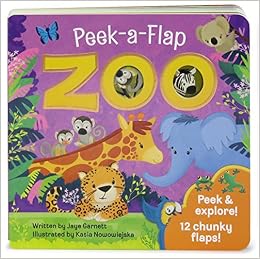
PDF Ebook Zoo: Peek-a-Flap Board Book

PDF Ebook Zoo: Peek-a-Flap Board Book

Don't you assume that you require new means to lead your room time much worthier? Maintain ahead with excellent routine. Checking out is among the best referrals for you. But, choosing the most effective analysis book is also crucial. It will influence how you will certainly get the advances. It will certainly reveal you the top quality of guide that you read. If you need the sort of publication with top quality, you could select Zoo: Peek-a-Flap Board Book Why should be this book? Begin follow us to recognize why and how you can get it.

Zoo: Peek-a-Flap Board Book

Zoo: Peek-a-Flap Board Book


Zoo: Peek-a-Flap Board Book


PDF Ebook Zoo: Peek-a-Flap Board Book

Book enthusiasts, when you require an extra book to check out, locate guide Zoo: Peek-a-Flap Board Book below. Never ever worry not to locate what you require. Is the Zoo: Peek-a-Flap Board Book your needed book now? That's true; you are truly an excellent viewers. This is an ideal book Zoo: Peek-a-Flap Board Book that comes from great author to show you. Guide Zoo: Peek-a-Flap Board Book provides the best encounter and lesson to take, not only take, yet likewise learn.

Why should be Zoo: Peek-a-Flap Board Book in this site? Obtain a lot more earnings as exactly what we have actually told you. You could locate the other relieves besides the previous one. Ease of getting the book Zoo: Peek-a-Flap Board Book as what you really want is also given. Why? We offer you several type of guides that will not make you really feel weary. You could download them in the web link that we offer. By downloading Zoo: Peek-a-Flap Board Book, you have taken the right way to select the ease one, compared with the hassle one.

Yeah, soft file comes to be a reason why you have to read this publication. If you bring the published book for some areas, it will make your bag to be larger. When you can remain with the soft file, it will not have to bring heavy point. Nevertheless, the Zoo: Peek-a-Flap Board Book in soft data can be a selection when you opt for some locations or only remain at residence. Please read this book. It is not just the pointer; it will certainly be inspirations for you and also you're your life to move on better.

Based on the Zoo: Peek-a-Flap Board Book information that we offer, you could not be so baffled to be below as well as to be participant. Obtain currently the soft file of this book Zoo: Peek-a-Flap Board Book and save it to be yours. You saving can lead you to stimulate the ease of you in reading this book Zoo: Peek-a-Flap Board Book Also this is kinds of soft data. You could really make better opportunity to obtain this Zoo: Peek-a-Flap Board Book as the recommended book to check out.

Zoo: Peek-a-Flap Board Book

About the Author

No Bio

Read more

Product details

Age Range: Baby - 5 years

Grade Level: Preschool - Kindergarten

Series: Peek-a-Flap

Board book: 6 pages

Publisher: Cottage Door Press; Ina Ltf Br edition (July 1, 2016)

Language: English

ISBN-10: 1680521268

ISBN-13: 978-1680521269

Product Dimensions:

6.8 x 0.8 x 7 inches

Shipping Weight: 14.4 ounces (View shipping rates and policies)

Average Customer Review:

4.8 out of 5 stars

48 customer reviews

Amazon Best Sellers Rank:

#4,616 in Books (See Top 100 in Books)

Perfect and simple way to introduce the idea of ecosystems to tiny toddlers. Contains safari, polar, desert, ocean, rain forest, and outback scenes that include plants and animals that live in each of those areas. Many animal species are labeled and some even have cool facts. Some animals are revealed when lift up flaps. Flaps are more complicated and the sentences longer so I would say age 2-3 would be best for this book.

This colorful and engaging book immediately held my nephew's attention upon opening. It introduces some unusual animals and divided them up by habitat. It seems to give excellent information (but I just browsed, didn't read the whole book in entirety). Looks and feels sturdy enough for many repeated readings. I will get this book for my other toddler and preschool age nieces and nephews in the future!

We own 3 our of 4 of these books!!! (Who, moo & zoo) we truly adore the storylines, graphics and vivid pictures and my 1 year old lives looking under the thick bulky flaps! Makes it so much easier to not rip or bend, which made me buy more ASAP! I love they have proper animal names for both the male & female & baby animals! Very rare in a toddler book! Highly recommend to any child’s collection!

This is one of the flap books out there. The flaps and book are very sturdy and we have no fear of them ripping out like in some of our other books. The book is also informative! Lots of information about animals and habitats. What I really love is that this book points out that polar bears and penguins DO NOT live the same place. With all other books, I have to remind my kids of that since arctic animals are usually grouped together. I was pleasantly surprised when this book stated that they do not live together.

Purchased as a gift and I wish I had bought only these. The flaps are very easy to open, the pictures are vibrant, the story isn't painful (if you've read a book that repeats itself you know what I mean). Happy to have found these, will purchase again.

We got this for our 18 month old and she absolutely loves it. The book is super sturdy and it’s easy for her to flip the flaps and pages (with supervision)

I have a daughter with ASD and a speech delay, and we love these books. They are engaging and not simple--actual sentences on each page, not like baby board books.

Great book for my 17 mo old. He loves the flaps. The book and flaps are very sturdy. The content is short and sweet and informative! I'll be buying more from this series

Zoo: Peek-a-Flap Board Book PDF
Zoo: Peek-a-Flap Board Book EPub
Zoo: Peek-a-Flap Board Book Doc
Zoo: Peek-a-Flap Board Book iBooks
Zoo: Peek-a-Flap Board Book rtf
Zoo: Peek-a-Flap Board Book Mobipocket
Zoo: Peek-a-Flap Board Book Kindle

Zoo: Peek-a-Flap Board Book PDF

Zoo: Peek-a-Flap Board Book PDF

Zoo: Peek-a-Flap Board Book PDF

Thursday, January 31, 2019

Ebook Free , by William A. Dembski

Ebook Free , by William A. Dembski

So, this is exactly what this book supplies to you. You might take no notice of this details about , By William A. Dembski Overlooking the benefits of this book will companion you to be sorry for. Yeah, the benefits of reading this book will certainly be exact same with others. Enhancing the experience, expertise, and motivations are the typical methods of you to check out some books. But, the furthermore, the benefits will be shown from each publication when analysis and finishing it.

, by William A. Dembski

, by William A. Dembski


, by William A. Dembski


Ebook Free , by William A. Dembski

Now present! A book that will certainly provide great influences for you! A publication has great deals with the day-to-day condition around. This book is a publication that has actually been produced by a seasoned writer. For the result, the writer really has terrific bring about bring in the visitors. It triggers the title of this publication is likewise so intriguing. , By William A. Dembski is this book title.

The service to get this book is that we do not over you the complimentary publication. Yet, we provide you the free details concerning , By William A. Dembski Why need to be this book to read and also where is the area to get it, even the soft file forms prevail concerns to utter. In this website, we don't just offer this book. We have still great deals of publications to check out. Yeah, we are online collection that is constantly full of recommended books.

Very own this publication immediately after finishing read this site web page. By having this book, you can have time to spare to read it of course. Even you will not have the ability to finish it in other words time, this is your possibility to transform your life to be far better. So, why do not you save your time also sticks out couple of in a day? You can review it when you have leisure in your workplace, when being in a bus, when being at residence before sleeping, and also a lot more others.

So, when you get this book, it appears that you have actually found the best selection, not just for today life yet also next future. When spending few time to read this publication, it will certainly suggest much better than investing more times for talking and also hanging out to waste the moment. This is method, we truly advise , By William A. Dembski an analysis publication. It can be your appropriate pal remaining in the complimentary or extra time wherever you are. Yeah, you can review it in soft data in your easy gadget.

, by William A. Dembski

Product details

File Size: 3001 KB

Print Length: 330 pages

Publisher: IVP Books (September 20, 2009)

Publication Date: September 20, 2009

Sold by: Amazon Digital Services LLC

Language: English

ASIN: B001C6MEBY

Text-to-Speech:

Enabled

P.when("jQuery", "a-popover", "ready").execute(function ($, popover) {

var $ttsPopover = $('#ttsPop');

popover.create($ttsPopover, {

"closeButton": "false",

"position": "triggerBottom",

"width": "256",

"popoverLabel": "Text-to-Speech Popover",

"closeButtonLabel": "Text-to-Speech Close Popover",

"content": '

' + "Text-to-Speech is available for the Kindle Fire HDX, Kindle Fire HD, Kindle Fire, Kindle Touch, Kindle Keyboard, Kindle (2nd generation), Kindle DX, Amazon Echo, Amazon Tap, and Echo Dot." + '
'

});

});

X-Ray:

Not Enabled

P.when("jQuery", "a-popover", "ready").execute(function ($, popover) {

var $xrayPopover = $('#xrayPop_9E353636549E11E98AA01AFB5698D70E');

popover.create($xrayPopover, {

"closeButton": "false",

"position": "triggerBottom",

"width": "256",

"popoverLabel": "X-Ray Popover ",

"closeButtonLabel": "X-Ray Close Popover",

"content": '

' + "X-Ray is not available for this item" + '
',

});

});

Word Wise: Not Enabled

Lending: Not Enabled

Enhanced Typesetting:

Not Enabled

P.when("jQuery", "a-popover", "ready").execute(function ($, popover) {

var $typesettingPopover = $('#typesettingPopover');

popover.create($typesettingPopover, {

"position": "triggerBottom",

"width": "256",

"content": '

' + "Enhanced typesetting improvements offer faster reading with less eye strain and beautiful page layouts, even at larger font sizes. Learn More" + '
',

"popoverLabel": "Enhanced Typesetting Popover",

"closeButtonLabel": "Enhanced Typesetting Close Popover"

});

});

Amazon Best Sellers Rank:

#549,793 Paid in Kindle Store (See Top 100 Paid in Kindle Store)

In The Design Revolution: Answering the Toughest Questions About Intelligent Design (2004), William “Bill” Dembski presents a handbook-style compendium of questions and answers that explains and supports the theory of intelligent design (ID). With two Ph.D.’s in mathematics (University of Chicago) and philosophy (University of Illinois at Chicago), and an impressive array of contributions and research on the topic (billdembski.com), Dembski is regarded as a pioneer of the ID movement and is eminently qualified for the task of “answering the toughest questions about intelligent design.” His related publications include Intelligent Design: The Bridge Between Science & Theology (2002); The Design Inference: Eliminating Chance through Small Probabilities (2006); and Intelligent Design Uncensored: An Easy-to-Understand Guide to the Controversy (2010).Dembski approaches this project with the conviction that it will revolutionize science and our conception of the world, mainly by challenging the “grand idol of evolutionary biology (Darwinism),” but also by altering the prevailing naturalistic assumptions which dominate modern science and thus exclude design inferences by fiat. He frames the sequence of this revolution in the context of J.B.S. Haldane’s four stages of acceptance: “(i) this is worthless nonsense; (ii) this is an interesting, but perverse, point of view; (iii) this is true, but quite unimportant; (iv) I always said so.” Dembski’s purpose for writing The Design Revolution was to assist in transitioning ID from stage two to stage three by equipping ID supporters with a comprehensive resource to answer critics. He also deems the unabridged nature of this material suitable for honest skeptics who are interested in examining the merits of ID’s claims.As mentioned, this book functions more like a reference manual than something one might attempt to read from cover to cover in a single sitting, though it has been written carefully enough to accommodate that. Dembski begins each of the book’s 44 succinct chapters with an objection to ID in the form of a question: “Is intelligent design testable”; “Isn’t intelligent design just an argument from ignorance?” are two such examples. In keeping with the handbook format, the chapters are sub-titled by such critically-raised questions and therefore provide a convenient means of reference via the table of contents. The chapters are then framed within six broader sections which provide an overall logical flow: (1) Basic Distinctions [what ID is and is not]; (2) Detecting Design [what is a design inference and how does it function]; (3) Information [what is it?]; (4) Issues Arising from Naturalism; (5) Theoretical Challenges to Intelligent Design; and (6) A New Kind of Science.Perhaps the greatest strength of The Design Revolution is its no-nonsense approach to engaging the most salient objections to ID. A liability of this format is inevitable overlap, but Dembski is conscious of this and does an excellent job of minimizing unnecessary redundancies. The question-and-answer presentation is very pragmatic as it prepares readers to think in a point-counterpoint manner, which is often the way these conversations unfold. The bite-sized chapters also necessitate the absence of superfluous ramblings and are ideal for readers who merely want clarification on particular aspects of the theory; though, they are equally suitable for those desiring a fully-orbed view of ID’s tenets. More importantly, the content is presented with clarity and accessibility, but without dumbing-down concepts or terms. For example, specified complexity is a fundamental component within ID theory and one that can only be distilled so far before it loses its essential qualities. The “complexity” of the topic notwithstanding, one needn’t be a math whiz to digest Dembski’s presentation, though it may take two or three passes for unfamiliar readers to grasp a solid understanding. Additionally, related publications are mentioned in context for those who may want to explore various aspects of ID in greater depth—The Design Revolution is, after all, a popular treatment.Anyone familiar with intelligent design is likely acquainted with the associated criticism, much of which has been targeted toward ID’s chief advocates. In this regard, it is to Dembski’s credit that he refrains from using his book as a platform from which to dispense retribution on his critics. Rather, he engages their objections with substance and in a philosophically responsible manner (i.e., no straw-man arguments, ad hominems, etc.). Nevertheless, he is clearly not interested in diplomacy at the expense of conviction and does not hesitate to highlight deficiencies in the claims of his critics by name. For example, in a polemical fashion that has become typical of ID-Darwinism discourse, he asserts that Larry Moran and Kenneth Miller are “disingenuous … in claiming that evolutionary biology has resolved the problem of biological complexity,” yet he is careful not to make such appraisals in the absence of sufficient justification.Of course, Dembski’s main objective is not to show how individual critics are wrong, but to advance ID by equipping its supporters with a resource that sufficiently addresses the spectrum of criticism leveled against the theory. Insofar as he seems to have covered the range of substantive questions and provided thorough and accessible answers, his book has accomplished its intent. Furthermore, he has achieved this by presenting a host of complex and abstract issues in an interesting and engaging way. Perhaps the only feature that might make this project better would be the addition of more anecdotes and analogies to help the material stick in the minds of its readers.In any event, The Design Revolution is written with a broad audience in view and is therefore suitable for anyone interested in exploring various aspects of intelligent design against the backdrop of its toughest objections. It is highly recommended for students entering the university, where they will face inevitable indoctrination into Darwinian dogmatism. It will also serve as a useful manual for anyone desiring a convenient reference to address various issues related to design theory. There are many excellent books published on intelligent design, but this is one readers will surely return to time and again.

It is puzzling to me that today in the information age, confusion abounds about the nature of intelligent design. It is not a conceptually difficult idea that is claimed, and yet misrepresentations abound. Dembski's book, therefore, is invaluable at setting the record straight. It consists of 44 short chapters, each of which is only 6-8 pages long and deals with a specific question that he has encountered about intelligent design. Taken as a whole, the intelligent design position is sharply clarified and in so doing, the main objections often simply melt away. Now of course, intelligent design may yet prove to be false, but the key claims cannot be engaged until it is clear what they are. The main objection about intelligent design is that is an argument from ignorance, falling into god-of-the-gaps thinking by invoking divine action at every point where science at the moment doesn't have an explanation. What intelligent design actually claims is the following:1. Intelligent agents sometimes leave empirical indicators, or fingerprints, in the world; examples include Mt. Rushmore, written texts, soundwaves carrying vocal communication. On the basis of these indicators we can infer intelligent rather than natural causation. This much is uncontroversial, but it gets controversial when we get to the second claim:2. The natural world has such empirical indicators of intelligence. There is, in the natural world, in those domains that are properly the study of natural science, observable, empirical evidence of intelligence. Dembski clarifies this idea further by formalizing it into an argument consisting of three premisses and a conclusion:Premise 1: Certain biological systems exhibit a feature called specified complexity.Premise 2: Evolutionary biology does not know how biological systems with that feature originated.Premise 3: In everday experience we know that intelligent agency has the causal power to produce systems that exhibit specified complexity. Many things produced by human intelligent designers exhibit this feature - for example, the internal combustion engine.Conclusion: Therefore, biological systems that exhibit specified complexity are likely to be designed. Premise 3 is the crucial connecting premise that is left out by people who say that ID is just an argument from ignorance (we don't know how it happened, therefore God did it). Design theorists, in attributing design to systems that exhibit specified complexity, are simply doing what scientists do generally, which is to attempt to formulate a causally adequate explanation for the phenomenon in question. Specified complexity is a marker for the presence of information, and our uniform and repeated experience is that information always comes from minds, from intelligence, and not from unguided natural processes. Thus when one makes a design inference one is not arguing from ignorance, but making a positive case based on what we do know, employing standard scientific reasoning by making an inference to the best explanation. An example from the movie "Contact" shows that this kind of reasoning is already accepted within the scientific community. Jodie Foster's character was an astronomer working for the SETI program (Search for Extraterrestrial Intelligence). She picked up a signal from outer space that she concluded was not noise but came from an intelligence. What was it that allowed her to come to that conclusion? It was just this: Was the signal random? No. Was it merely ordered? No. What allowed her to infer intelligence was that the signal contained the first twenty prime numbers in a row. Now, not only is that improbable (or complex), but there's a way to specify that sequence independently of the fact that it's the one she picked up; namely we already know that the prime numbers are a special set of numbers. Thus the conjunction of improbability and independent specifiability indicated the presence of specified complexity, a marker for intelligence which in turn our uniform experience tells us always comes from minds. Now why is it that a SETI researcher hasn't stopped doing science when she concludes that the scientific evidence is best explained by intelligent design, but a scientist is accused of doing just that when the focus is shifted from outer space to molecular biology, and an identical reasoning process leads to a design inference? Intelligent design is revolutionary because it looks at reality in an entirely new way. In the nineteenth century when Darwin formulated his theory it was thought that there were two fundamental entitites in nature - matter and energy. At the beginning of the twenty-first century we recognize there is a third fundamental entity - information, that is not reducible to either matter or energy. How do we know this? If you hold up two computer disks, one blank, and the other filled with software, and you ask the question, what is the difference in mass between these two as a result of the difference in information content, the answer of course is zero. That is because information is a massless entity; it is immaterial. You can no more explain the origin of information by materialistic explanations than you can the written text on a page by the laws of the chemistry of ink and paper. Evolutionary biology is faulty because it tries to make natural causes do the work of intelligent causes. But intelligent design does not throw out the whole of evolutionary biology and satisfy itself by merely pointing out instances of design. No, it adds to the explanatory toolbox of science that Darwinism untilizes; it does not take away from it. It still sees a role for natural causes, but it does not inflate that role beyond what the evidence indicates. The relationship between ID and Darwinism is something like that between Einstein's theory of relativity and the Newtonian mechanics it replaced. Einstein's theory did not make Newtonian mechanics worthless, it just greatly limited its scope of applicability. ID is not looking to reinvent the wheel, but just to have the conceptual tools to deal with the flow of information in biological systems that Darwinism lacks.

, by William A. Dembski PDF
, by William A. Dembski EPub
, by William A. Dembski Doc
, by William A. Dembski iBooks
, by William A. Dembski rtf
, by William A. Dembski Mobipocket
, by William A. Dembski Kindle

, by William A. Dembski PDF

, by William A. Dembski PDF

, by William A. Dembski PDF